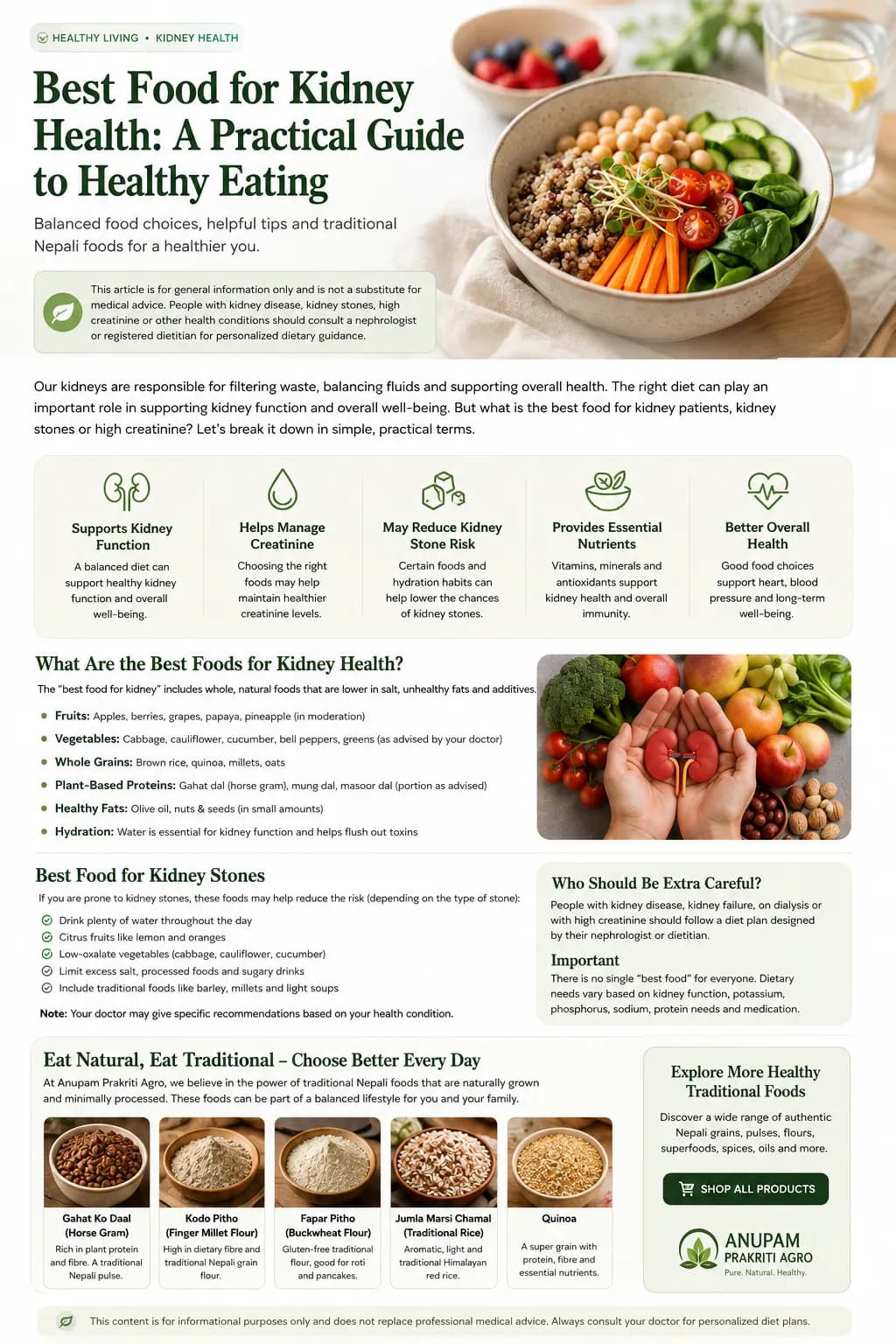
Best Food for Kidney Health: A Practical Guide to Healthy Eating
Wondering about the best food for kidney patients or simply looking for better foods to support your overall kidney health? Your daily food choices can play an important role in maintaining a balanced lifestyle.
The important thing to understand is that there is no single “best food for kidney” that works for everyone. Dietary needs can change depending on kidney function, creatinine levels, kidney stones, medications and whether someone is receiving dialysis.
This guide explains some generally nutritious food choices, foods that may need limiting, and how traditional Nepali foods can fit into a balanced diet.
Important: This article is for general educational information and is not medical advice. People with kidney disease, kidney failure, high creatinine, kidney stones or those receiving dialysis should follow the personalized advice of a qualified doctor, nephrologist or registered dietitian.
What Is the Best Food for Kidney Health?
When people search for “what is the best food for kidney”, the answer depends on the individual's health condition. In general, a balanced eating pattern built around minimally processed foods, appropriate portions and adequate hydration can support overall health.
For some people, this may include fresh fruits and vegetables, whole grains, legumes, healthy fats and other nutrient-rich foods. However, people with kidney disease may need to monitor nutrients such as sodium, potassium, phosphorus and protein.
That is why a diet that is healthy for one person may not necessarily be appropriate for someone with advanced kidney disease or on dialysis.
Best Food for Kidney Patients: Where Should You Start?
If you are searching for the best food for kidney patients, start by thinking about the overall quality of your diet rather than one particular food. Fresh and minimally processed foods can be useful building blocks for many healthy meal plans.
1. Fresh Fruits
Fruits such as apples, berries, grapes and pineapple can be part of a balanced diet. However, people with kidney disease may have specific potassium or fluid restrictions, so portion sizes should follow individual medical advice.
2. Vegetables
Vegetables provide fibre and a range of vitamins and minerals. Cabbage, cauliflower, cucumber, bell peppers and other vegetables can be included depending on individual dietary requirements.
3. Whole and Traditional Grains
Whole and traditionally prepared grains can provide carbohydrates, fibre and other nutrients. Examples include millet, buckwheat and selected traditional rice varieties. The right choice and serving size depend on individual nutritional requirements.
4. Pulses and Plant-Based Protein
Pulses such as lentils and beans are useful sources of plant-based protein and fibre. But people with chronic kidney disease may need to control their total protein, potassium or phosphorus intake.
Best Food for Kidney Problem: Why Individual Needs Matter
The phrase “best food for kidney problem” covers many different conditions. Someone with an early-stage kidney problem may receive completely different dietary advice from someone with advanced kidney disease.
For example, a doctor may recommend changes to sodium, protein, potassium, phosphorus, calories or fluid intake depending on the person's kidney function.
Therefore, avoid following a generic kidney diet without understanding the specific condition you are managing.
Best Food for Kidney Creatinine: What Should You Know?
People often search for the best food for kidney creatinine when they notice an elevated creatinine level. Creatinine is commonly used as one marker when assessing kidney function, but food alone should not be considered a treatment for elevated creatinine.
If your creatinine is high, the most important step is understanding the underlying cause with your healthcare professional. Your doctor or dietitian can recommend an appropriate diet based on your kidney function, medications and other health factors.
Best Food for Kidney Stones
Dietary advice for kidney stones can also vary depending on the type of stone. For many people, drinking enough fluid is an important part of preventing stones, unless a doctor has advised fluid restriction.
Depending on the type of kidney stone, healthcare professionals may recommend changes to sodium, animal protein, calcium or oxalate intake.
General Kidney Stone Food Tips
- Drink adequate water unless your doctor has restricted fluids.
- Limit excessive salt and highly processed foods.
- Eat a balanced diet with appropriate portions of fruits and vegetables.
- Avoid making major dietary changes without professional guidance.
- Ask your doctor about the specific type of kidney stone you have.
Best Food for Kidney Stone Patients
There is no universal food list for every kidney stone patient. The best diet can depend on whether the stone is calcium oxalate, uric acid or another type.
For this reason, someone searching for the best food for kidney stones patients should first identify the type of stone and follow the dietary recommendations provided by a healthcare professional.
Best Food for Kidney Dialysis Patients
People undergoing dialysis usually have more specific nutritional requirements. Depending on the individual, doctors may recommend monitoring protein, sodium, potassium, phosphorus and fluid intake.
Therefore, the best food for kidney dialysis patients should be selected according to their dialysis schedule, laboratory results and individual medical needs.
A food that is nutritious for the general population may not automatically be appropriate in the same quantity for someone receiving dialysis.
Foods That May Need to Be Limited
For people with kidney problems, healthcare professionals may recommend limiting certain foods or ingredients depending on their condition.
- Very salty and heavily processed foods
- Packaged snacks with high sodium
- Excessive sugary drinks
- Foods high in phosphorus when medically restricted
- Excessive protein when protein restriction is advised
- High-potassium foods when potassium restriction is required
- Excess fluid when a fluid restriction has been prescribed
These restrictions are not the same for everyone. Always follow the diet plan recommended for your specific condition.
Can Traditional Nepali Foods Be Part of a Healthy Diet?
Traditional Nepali food offers a wide variety of grains, pulses, flours and other locally sourced ingredients. The key is choosing foods according to your individual nutritional requirements and eating them in appropriate portions.
At Anupam Prakriti Agro, we focus on traditional Nepali foods sourced from different regions of Nepal. Our collection includes grains, pulses, flours, rice varieties and other local food products.
If you are simply looking to make your everyday meals more traditional and less dependent on heavily processed foods, you can explore our collection here:
Explore Traditional Nepali Foods at Anupam Prakriti Agro →
Gahat Dal: A Traditional Nepali Pulse
Gahat dal, also known as horse gram, is one of Nepal's traditional pulses. It provides plant-based protein and dietary fibre and has long been used in Nepali households.
However, if you have kidney disease, kidney stones or are following a medically restricted diet, do not assume that gahat dal is automatically suitable for you. The appropriate amount of protein, potassium and phosphorus depends on your individual condition.
Featured Product: Gahat Ko Daal
Traditional Nepali gahat dal, also known as horse gram, for preparing homemade dal, soups and other traditional dishes.
Other Traditional Foods You Can Explore
If you're interested in traditional Nepali ingredients, Anupam Prakriti Agro has a growing collection of locally sourced foods from different parts of Nepal.
Kodo Pitho
Traditional millet flour used for dishes such as dhido and roti.
Fapar Pitho
Traditional buckwheat flour used for roti and other homemade recipes.
Jumla Marsi Chamal
A traditional red rice variety associated with the high-altitude region of Jumla.
Anadi Chamal
A traditional Nepali rice variety valued for its distinctive taste and texture.
Looking for more authentic Nepali food? Explore the complete collection at Anupam Prakriti Agro Shop .
Best Food for Kidney Disease: A Simple Approach
If you have been diagnosed with kidney disease, focus less on finding one “miracle food” and more on understanding the dietary pattern recommended for your particular stage and condition.
A practical approach is to:
- Understand your kidney function and medical condition.
- Ask your doctor whether you need sodium, potassium or phosphorus restrictions.
- Understand your individual protein requirements.
- Choose minimally processed foods where appropriate.
- Pay attention to portion sizes.
- Keep regular medical follow-ups.
Best Food for Kidney Failure Patients
People with kidney failure require individualized nutritional care. Depending on whether someone is receiving dialysis or managing kidney failure without dialysis, their nutritional requirements can be very different.
For that reason, there is no universal list of the best food for kidney failure patients. A nephrologist or renal dietitian can create a meal plan based on laboratory results, medications, kidney function and treatment.
Frequently Asked Questions
What are the best foods for kidney health?
There is no single best food for everyone. Generally, minimally processed foods, appropriate fruits and vegetables, whole grains and suitable protein sources can be part of a balanced diet. People with kidney disease need individualized advice.
What is the best food for kidney stones?
The appropriate diet depends on the type of kidney stone. Adequate hydration and limiting excessive sodium are commonly important, but specific recommendations should come from your healthcare professional.
What is the best food for high creatinine?
There is no food that should be considered a treatment for high creatinine. Elevated creatinine should be evaluated by a healthcare professional to identify the underlying cause and appropriate treatment.
What is the best food for kidney dialysis patients?
Dialysis patients usually need an individualized diet that may include specific protein, sodium, potassium, phosphorus and fluid targets. A renal dietitian can help determine the appropriate foods and portions.
Can kidney patients eat traditional Nepali foods?
Some traditional Nepali foods can be included in a kidney-conscious diet, but the appropriate foods and portions depend on the individual's kidney function and dietary restrictions. Always follow your healthcare professional's advice.
Final Thoughts
Searching for the best food for kidney patients can be confusing because kidney nutrition is highly individual. Instead of following a generic list from the internet, focus on understanding your own nutritional requirements.
Traditional Nepali foods can still have a place in everyday cooking when selected and portioned appropriately. If you are simply looking to discover authentic local grains, pulses, flours and other Nepali foods, you can explore the collection from Anupam Prakriti Agro.
👉 Explore All Traditional Nepali Food Products →
For anyone with kidney disease, kidney stones, high creatinine, kidney failure or who is receiving dialysis, please speak with your doctor or qualified renal dietitian before making significant dietary changes.