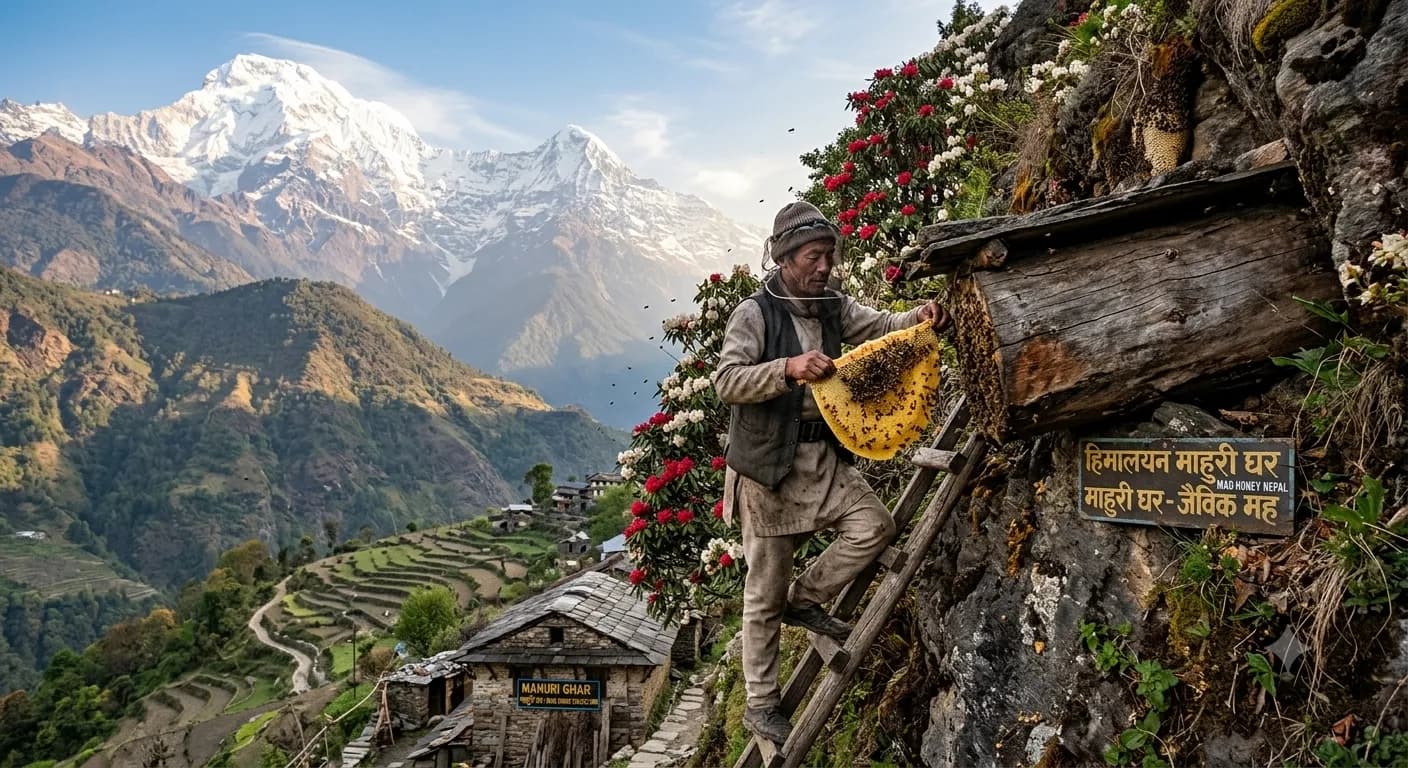
Mad Honey Nepal: Everything You Need to Know About the Himalayan Mahuri Ghar and Its Superfood Honey
Deep in Nepal's mid-hill cliffs, a rare kind of honey has been harvested the same dangerous way for generations — hanging from bamboo ladders, hundreds of feet above the ground, to reach wild bee colonies clinging to rock faces. This is mad honey, one of Nepal's most talked-about natural exports, and it's tied closely to something every Nepali household already knows: the mahuri (honey bee) and its mahuri ghar (beehive).
In this guide, we'll walk through what mad honey actually is, how a mahuri colony works from birth to harvest, a few practical tricks for dealing with honey stains, and why real Himalayan honey deserves a place next to any other 100% organic food in your kitchen.
What Is Mad Honey — And Why Is Nepal Famous for It?
Mad honey gets its name from a natural compound called grayanotoxin, found in the nectar of rhododendron flowers that bloom across Nepal's mid-altitude hills every spring. When the giant Himalayan honey bee (Apis laboriosa) feeds on these blossoms, the resulting honey carries a distinct reddish tint, a slightly bitter edge, and — in larger quantities — a mild tingling or warming sensation.
For centuries, communities in Nepal's hill districts have harvested this honey directly from cliffside colonies, a practice that's now drawn attention from food explorers and wellness communities worldwide. It's rare, seasonal, and entirely dependent on wild bees doing what they've always done — which is exactly what makes authentic mad honey so hard to find outside the region it comes from.
Mahuri Ghar: Understanding the Life Cycle of the Honey Bee
To understand why real Himalayan honey is worth seeking out, it helps to understand what actually happens inside a mahuri ghar before a single drop reaches a jar.
The Life Cycle of a Honey Bee, Stage by Stage
- Egg stage: The queen bee lays a single egg in each hexagonal cell of the hive. Within about three days, the egg hatches into a larva.
- Larva stage: Worker bees feed the larva a steady diet of honey and pollen, and in the case of a future queen, royal jelly. The larva grows rapidly over roughly six days.
- Pupa stage: The cell is capped with wax, and the larva transforms inside — growing legs, wings, and eyes — over about twelve days.
- Adult bee: A fully formed bee chews its way out of the cell and joins the colony, taking on roles as a nurse, a builder, a forager, or eventually a queen, depending on the hive's needs.
A single mahuri ghar can house tens of thousands of bees working in this cycle continuously, which is exactly why a wild cliffside colony can produce enough honey each season to make the harvest worth the risk.
How to Remove Honey Stains (Without Ruining the Fabric)
If you cook with real, raw honey at home, you already know how sticky things can get. Honey stains are common, but they're also one of the easier stains to deal with if you catch them early. Here's a simple approach that works on most fabrics:
- Scrape off excess honey gently with a spoon or dull knife before it soaks further into the fabric.
- Rinse from the back of the stain under warm running water to push the honey out rather than further into the fibers.
- Apply a small amount of liquid dish soap directly to the stain and rub gently between your fingers for about a minute.
- Let it sit for 10–15 minutes before rinsing again with warm water.
- Wash as usual in your washing machine, checking the spot is fully gone before putting it in the dryer — heat can set any remaining residue.
For older, dried stains, soaking the fabric in a mix of warm water and a spoon of white vinegar for 30 minutes before washing usually helps loosen things up.
Why Himalayan Honey Belongs in the Superfood Conversation
Raw, unprocessed honey from high-altitude Himalayan hives isn't just a sweetener — it's often grouped with other himalayan food staples praised for their density of natural nutrients. Unlike heavily processed commercial honey, raw mountain honey retains its natural enzymes, antioxidants, and trace minerals absorbed from the wildflowers the bees forage on.
It's this kind of unaltered, close-to-source quality that's earned raw Himalayan honey a spot on many people's superfood lists — right alongside other Himalayan staples like Marsi Chamal and cold-pressed mustard oil.
Where to Find Authentic, 100% Organic Himalayan Honey
Genuine mad honey and raw mahuri honey are hard to source reliably — a lot of what's sold commercially is diluted or mixed with regular farmed honey. Anupam Prakriti Agro works directly with farming and harvesting communities across Nepal's Himalayan districts to bring genuinely raw, 100% organic food — including seasonal Himalayan honey — straight to your kitchen, with no middlemen involved.
👉 Explore authentic Himalayan honey and other organic staples at Anupam Prakriti Agro's online shop, and taste the difference that comes from sourcing directly from the mountains.